
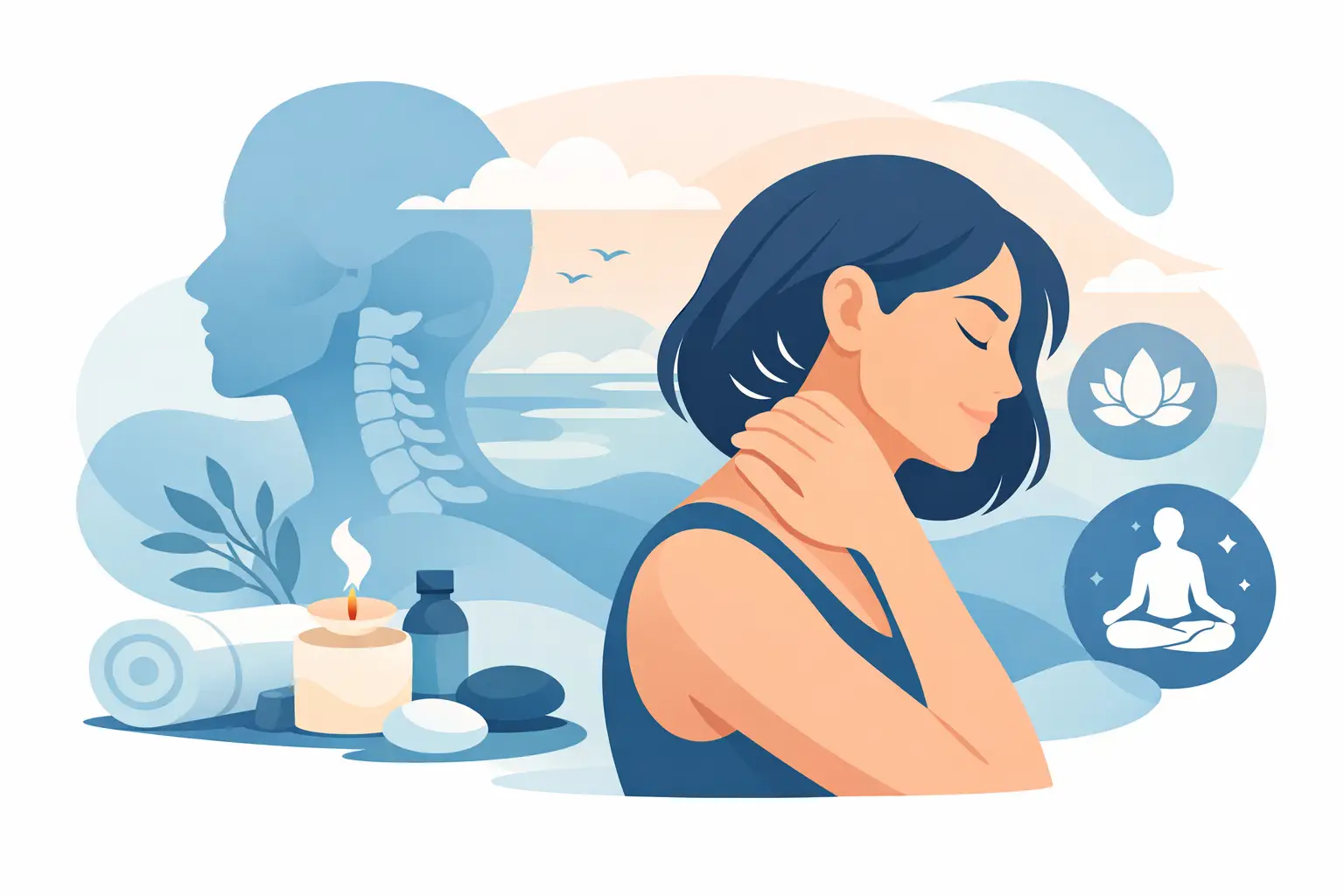
That tight, pulling feeling at the base of your neck can make a normal workday feel far longer than it should. If you are wondering how to relieve neck tension, the answer is rarely one dramatic fix. More often, meaningful relief comes from a few gentle choices that help your body feel supported, unhurried, and cared for.
Neck tension is especially common when your day asks you to stay in one position for too long. Hours at a laptop, driving through Los Angeles traffic, looking down at a phone, carrying stress in your shoulders, or waking after an awkward night of sleep can all leave the neck feeling stiff and fatigued. The goal is not to force the tension away. It is to create the conditions that let those overworked muscles soften.
How to Relieve Neck Tension Without Overdoing It
When your neck feels tight, it can be tempting to stretch aggressively or press deeply into the sorest spot. That approach can sometimes leave an already-sensitive area feeling worse. Start with warmth, easy movement, and a slower pace instead.
A warm shower, bath, or warm compress across the upper shoulders can be a lovely first step. Heat may help the area feel more comfortable and ready to move. Settle in for 10 to 15 minutes, then let your shoulders drop naturally rather than holding them up toward your ears.
Once the area feels warm, try a small range of motion. Slowly turn your head to look over one shoulder, return to center, then repeat on the other side. Next, gently tip one ear toward one shoulder without lifting the shoulder to meet it. Hold only where you feel a mild stretch, not pain, and breathe normally. A few relaxed repetitions are more useful than pushing for a deeper position.
It also helps to check the rest of your body. Neck tension often travels with a tight jaw, rounded shoulders, or shallow breathing. Unclench your teeth, rest your tongue softly, and take several slower breaths that expand through your ribs. This may sound simple, but it gives your nervous system a signal that it does not need to brace so hard.
Make Your Work Setup Kinder to Your Neck
For many professionals, neck discomfort is not caused by one stressful afternoon. It builds quietly through repeated habits. You may not be able to eliminate desk time, but you can make it less demanding on your body.
Position your screen close to eye level so you are not continually bending your head forward. Keep your keyboard and mouse near enough that your elbows can remain relaxed by your sides. If you work from a laptop, even alternating between a seated setup and a standing counter for short periods can change the load on your neck and shoulders.
The most restorative adjustment is often a break before you feel desperate for one. Every 30 to 60 minutes, look away from the screen, stand up, and walk for a minute or two. Roll your shoulders slowly, let your arms hang, and take a few full breaths. These brief resets are not a luxury. They are a practical way to keep tension from becoming the default position of your day.
Phone posture deserves the same attention. Rather than holding your phone low in your lap for long stretches, bring it closer to eye level when possible. Your neck is designed to move, but it appreciates not having to hold the same forward angle for hours.
Gentle Self-Massage Can Bring Immediate Comfort
A few minutes of self-massage can be wonderfully soothing after a long day. Apply a small amount of body oil or lotion if you like, then use the flat pads of your fingers to make slow circles along the tops of your shoulders. Stay away from pressing directly on the front or sides of the neck. Focus instead on the broad muscles that run from the shoulders toward the base of the skull.
Pressure should feel comforting, not sharp, electric, or intensely tender. If you find yourself holding your breath or tensing against your own touch, lighten up. The point is to invite release, not to win a contest with a knot.
A massage ball placed between your upper back and a wall can also help ease the areas around the shoulder blades that often contribute to neck tension. Move slowly and avoid rolling directly over the spine. This is a good option for occasional tightness, but it does not replace attentive care when discomfort is persistent or complex.
Look Beyond the Neck Itself
The neck rarely works alone. Stress held in the shoulders, chest, upper back, and jaw can all make it feel as though the neck is carrying the entire day. A more complete approach gives these connected areas attention too.
Try opening the front of your chest by standing in a doorway with your forearms resting lightly on the frame, then taking a small step forward. Keep the stretch gentle and let your shoulders remain low. A short walk can help as well, especially if you let your arms swing naturally and lift your gaze from the ground.
Sleep can make a noticeable difference. Your pillow should support your head in a neutral position, rather than tilting it sharply upward or letting it fall too far to one side. There is no single perfect pillow for everyone. Side sleepers and back sleepers generally need different levels of support, and comfort matters as much as the label on the pillow.
Hydration, regular meals, and adequate rest also support the way your body handles stress. They will not erase neck tension on their own, but they can make it easier to recover from the physical demands of a busy week.
When Personalized Massage Is the Better Next Step
At-home care is valuable for everyday tightness, but sometimes your body is asking for more focused attention. A professional massage can be especially helpful when the neck and shoulders feel consistently heavy, when tension returns soon after stretching, or when you simply want space to fully unwind instead of trying to manage it between meetings.
A personalized session allows the treatment to respond to your body that day. Some clients need soothing, unhurried work that encourages total relaxation. Others benefit from more focused pressure through the upper back and shoulders, with care taken to keep the experience comfortable and restorative. The best massage is not defined by how intense it feels. It is defined by whether you leave feeling lighter, more at ease, and better connected to your body.
At Absolute Skin Therapy in West Hollywood, massage is approached with that individualized attention. In a private, calming setting, your comfort and goals guide the experience, whether you are recovering from a demanding workweek or making intentional time for your wellness.
Know When to Seek Medical Care
Muscle tension is common, but not every neck symptom should be treated as routine tightness. Seek medical guidance promptly if neck discomfort follows an accident or fall, is severe or worsening, or comes with numbness, weakness, dizziness, fever, a severe headache, or pain that travels down an arm. It is also wise to check with a qualified clinician before massage or stretching if you have a medical condition that affects your neck or spine.
For the familiar tension that arrives after too much sitting, too much stress, or too little recovery, consistency is often more powerful than intensity. Give yourself a few quiet minutes to move, breathe, warm the area, and release the expectation that you must carry everything in your shoulders. Your body notices when you make room for relief.
Leave a Reply