
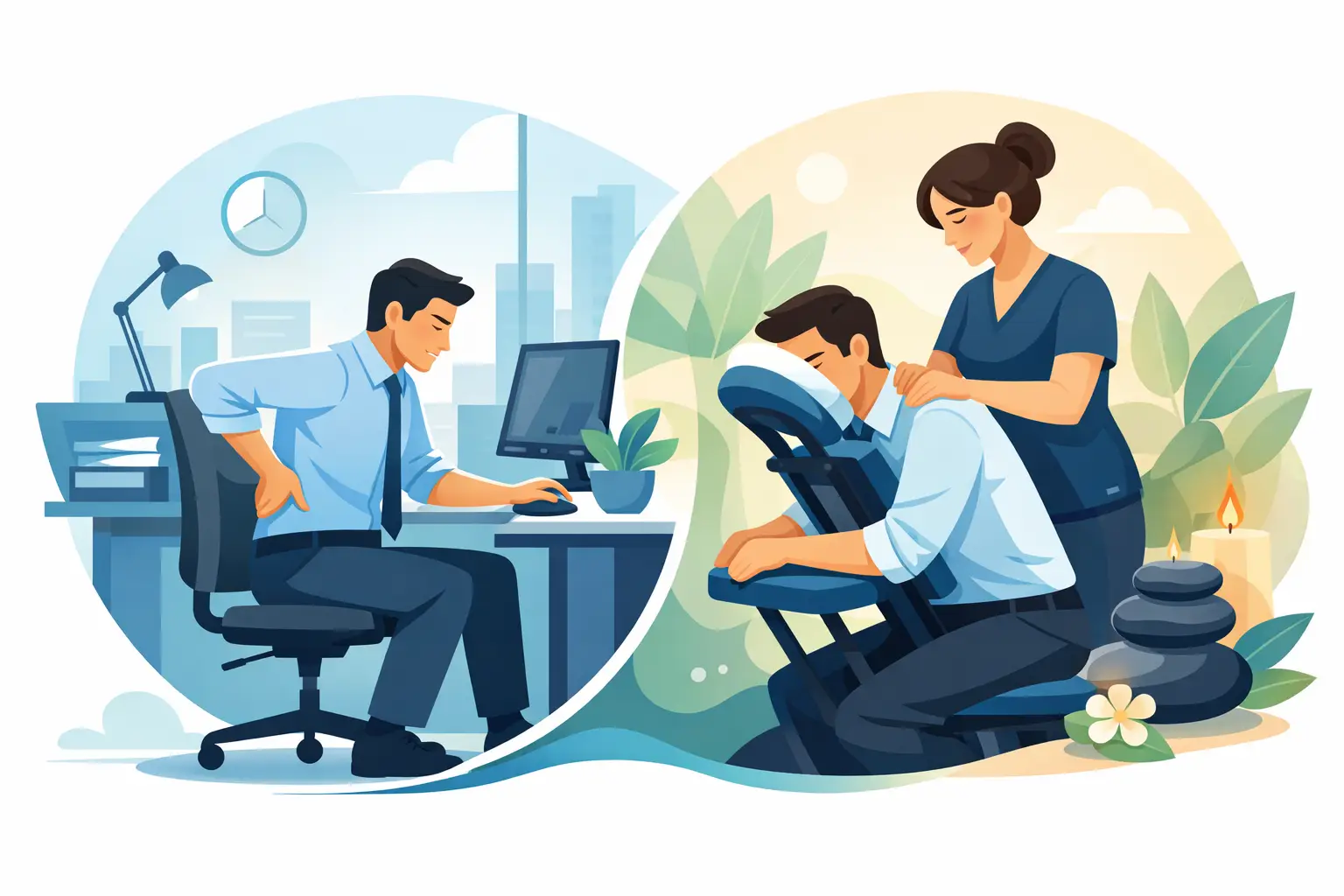
The stiffness often starts quietly: a shoulder inching toward your ear during a deadline, a tight jaw after back-to-back calls, or a low back that protests when you stand up from your desk. Massage therapy for office workers offers more than a pleasant break from a demanding schedule. It creates dedicated time to release accumulated tension, settle the nervous system, and feel comfortably present in your body again.
For professionals whose work happens largely behind a screen, massage can be a thoughtful part of ongoing wellness. The right session is not about forcing tight muscles to give way. It is about attentive, personalized care that meets your body where it is that day.
Why Office Work Creates So Much Tension
A desk job may not look physically strenuous, yet the body experiences the effects of stillness, repetition, and concentration over long hours. Typing, trackpad use, phone calls, driving between meetings, and a forward-leaning posture can leave the neck, shoulders, forearms, hips, and back feeling overworked.
Stress adds another layer. When work feels urgent, many people unconsciously brace through the shoulders, clench the jaw, or hold their breath. By the end of the day, that tension can make it harder to unwind, sleep comfortably, or enjoy time away from work.
Massage creates a change of pace. Calm, intentional touch can help soften areas that feel guarded and bring welcome awareness to the places you have been ignoring all week. Many clients leave feeling lighter, more open through the shoulders and chest, and better able to take a full breath.
That does not mean every desk-related ache calls for deep pressure. Sometimes a soothing, slower approach is the most restorative choice, especially after a stressful week or when your body feels sensitive. Other times, more focused deep tissue-style work may feel helpful for persistent tightness. The most rewarding experience starts with listening, not assuming.
Massage Therapy for Office Workers Should Feel Personal
No two office bodies carry stress in the same way. One person may feel a pulling sensation from the base of the skull into the upper back. Another may be most aware of tight forearms from computer work, or hips that feel restricted after hours of sitting. A personalized massage allows the treatment to reflect those differences.
Before your session, share what has been bothering you, how your workday typically feels, and what kind of pressure you enjoy. Mention whether you have an upcoming presentation, a long flight, a difficult week, or simply a strong need to quiet your mind. These details help shape a session that feels both indulgent and purposeful.
At Absolute Skin Therapy, individualized attention is central to the experience. A private, clean, welcoming setting gives you room to let go of your schedule and focus on how you feel. Your treatment can emphasize the areas asking for care while still leaving space for the full-body relaxation that makes a massage feel like a true reset.
Communication matters throughout. Pressure should feel effective without making you brace or hold your breath. If an area feels too tender, if you are cold, or if you would like more attention somewhere else, speak up. A premium massage experience is designed around your comfort.
The Benefits You May Notice Beyond the Table
The immediate appeal of massage is easy to understand: your shoulders feel less crowded, your back feels more comfortable, and your mind is not racing quite as fast. But the effect can carry into the rest of the week.
When you feel less tense, it may be easier to sit with better awareness, take a short walk between tasks, and step away from your screen before discomfort becomes overwhelming. Some clients find that a regular massage appointment gives their week a needed boundary, a moment when work is no longer the center of attention.
Massage is not a replacement for medical care, ergonomic adjustments, movement, or rest. If you have severe pain, numbness, tingling, sudden weakness, an injury, or symptoms that do not improve, consult a qualified medical professional. For everyday desk tension, however, massage can be a supportive and deeply restorative part of caring for yourself.
Finding a Rhythm That Fits Your Workweek
There is no universal schedule for massage. The ideal frequency depends on your stress level, workload, physical comfort, and personal wellness goals. Someone navigating an especially intense season may appreciate more consistent care, while another person may choose a monthly session as a reliable way to reset.
Instead of waiting until you feel completely depleted, consider booking around the natural demands of your calendar. A massage before a busy stretch can help you begin with a calmer body. A session after a major project, travel week, or extended period of overtime can offer a welcome transition out of work mode.
Consistency often matters more than intensity. A treatment that feels nurturing, comfortable, and easy to maintain can support your well-being better than an occasional session that leaves you feeling overly sore. Your body should feel cared for, not challenged.
Small Habits That Help Between Appointments
Massage works beautifully alongside simple moments of care throughout the day. You do not need a perfect routine or a complete desk overhaul to make a difference. Brief, intentional breaks can help prevent tension from building unchecked.
Try standing up when you finish a call, rather than immediately starting the next task. Let your shoulders drop before you answer an email. Place both feet on the floor and take a few slower breaths when you notice yourself rushing. A short walk for water or fresh air can be enough to interrupt hours of stillness.
Your workspace deserves attention, too. Position your screen at a comfortable height, keep frequently used items within easy reach, and support your back in a way that allows you to sit without straining. These adjustments are not a cure-all, but they can make your workday feel less demanding on your body.
Evenings can be an opportunity to protect the benefits of your session. A warm shower, gentle stretching, hydration, and a little less screen time before bed can help you hold on to that relaxed feeling. The goal is not to be perfectly disciplined. It is to offer your body more chances to recover.
Choosing the Right Pressure and Focus
It is tempting to think that deeper always means better. In reality, the best pressure is the one that helps your body relax while addressing the tension you feel. If you leave a massage feeling bruised, exhausted, or more guarded than before, the approach may have been too intense for that day.
A soothing massage can be ideal when mental stress is high, sleep has been poor, or you simply want to rest. More concentrated work may be appropriate when certain areas feel consistently tight and your body responds well to firmer pressure. Your needs may change from appointment to appointment, which is why an attentive consultation is so valuable.
Be open about any health conditions, recent procedures, injuries, skin sensitivities, or medications that could affect your session. This helps ensure that your treatment is planned with care and that your comfort remains the priority.
Make Your Reset Feel Intentional
For office workers, self-care does not have to wait for a vacation or a complete burnout moment. A massage appointment can become a quiet, restorative pause in the middle of a full life: time to release the posture of productivity, soften the tension you have been carrying, and return to your routine feeling refreshed.
Your body supports every meeting, commute, deadline, and ambition. Giving it thoughtful care is not an interruption to your week. It is a gracious way to move through it with more ease.
Leave a Reply