
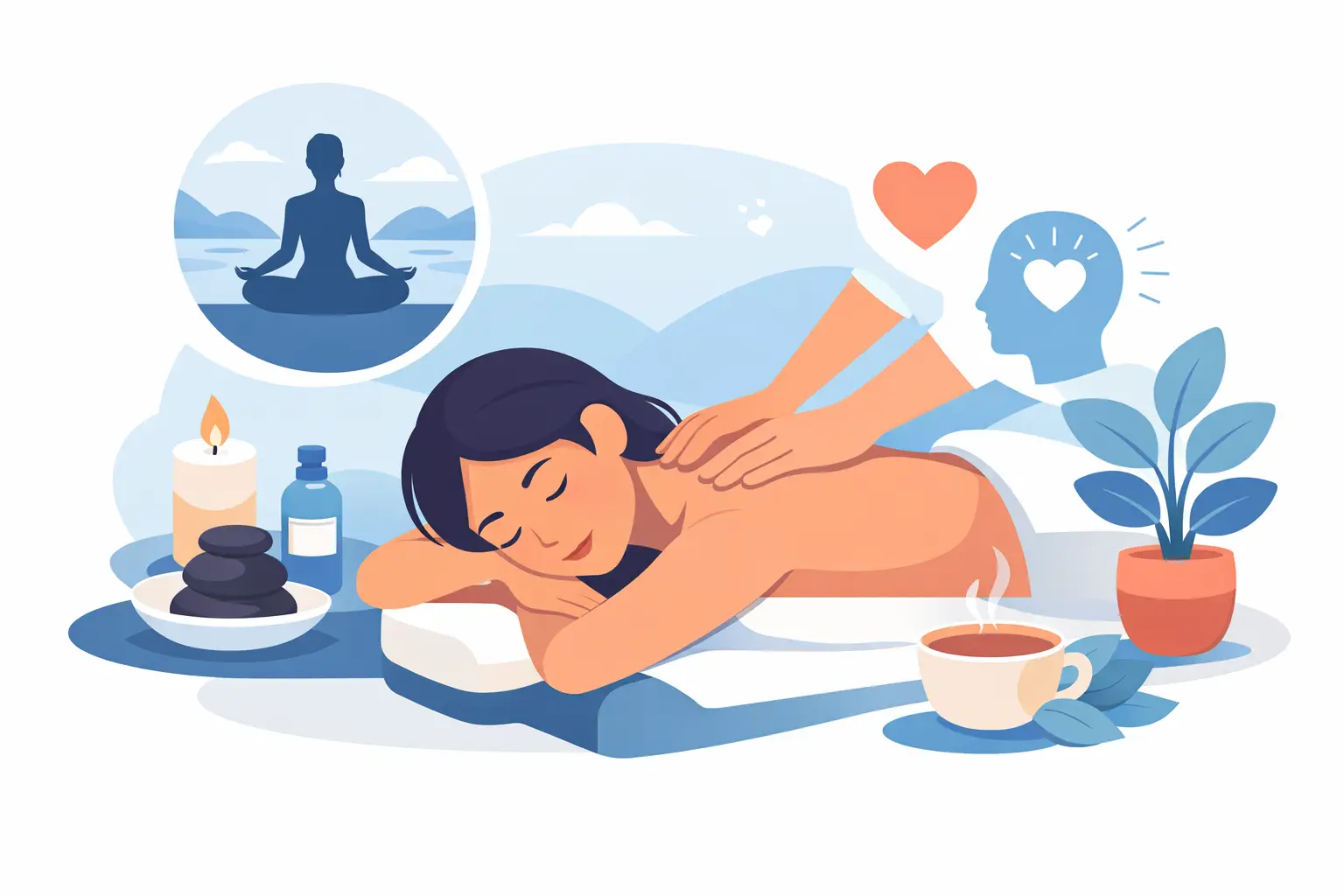
Your shoulders may be the first to tell the truth. They creep toward your ears during a packed workday, stay tense through traffic, and remain there long after you have finally sat down. A massage for stress relief creates space to notice that tension, release it, and return to yourself with a little more ease.
Stress does not always arrive as one dramatic moment. More often, it builds quietly through tight deadlines, long hours at a desk, intense workouts, poor sleep, and the constant expectation to be available. A thoughtfully personalized massage offers more than a temporary escape. It is dedicated time for your body to soften and your mind to settle in a private, comforting setting.
Why Stress Shows Up in the Body
When life feels demanding, the body often responds by bracing. The jaw tightens. The neck becomes stiff. The upper back and shoulders start to ache, while the lower back and hips may feel heavy after hours of sitting. Even people who appear calm can carry a surprising amount of physical tension.
That is why relaxation should not be treated as an afterthought. When you give your body uninterrupted time to rest, slow down, and receive attentive care, the shift can be felt well beyond the treatment room. Many clients leave feeling lighter, more comfortable in their movement, and better prepared to handle the rest of their week.
The experience is personal. One person may need gentle, soothing touch after an emotionally draining week. Another may feel stress most intensely as persistent knots through the shoulders and need more focused pressure. The best session is not defined by a single technique. It is defined by how well it responds to you.
What Massage for Stress Relief Can Feel Like
A truly restorative massage begins before the first movement. It begins with being listened to. A brief conversation about where you feel tension, your preferred pressure, recent activity, and what would help you feel most comfortable sets the tone for more meaningful care.
For many clients, the first few minutes are the most revealing. It can take time to realize how much tension the body has been holding. As the pace slows and focused touch encourages tight areas to relax, breathing often becomes deeper and the urge to mentally manage the day begins to fade.
The sensation should feel comforting, not like something you have to endure. More pressure is not automatically better pressure. Deep, targeted work can be helpful for areas that feel especially tight, but it should always remain within your comfort level. If pressure causes sharp pain, makes you tense up further, or leaves you unable to relax, it is worth speaking up. Personalized care means adjustments are welcomed.
A soothing massage may use long, calming movements to encourage full-body relaxation. More focused work may be incorporated where your body needs additional attention, such as the neck, shoulders, back, or legs. Aromatherapy can add a gentle sensory element for clients who enjoy it, helping the room feel even more removed from the demands waiting outside.
The Benefits Reach Beyond an Hour on the Table
The most immediate benefit is often simple: relief. Muscles can feel less guarded, your body may feel less compressed, and your thoughts may not race quite as quickly. That pause matters, especially when stress has become your normal setting.
Massage can also support the rituals that help you recover well. When physical tension is eased, it may be easier to settle into a restful evening, stretch more comfortably, or recognize when you need to step away from your screen. Clients often describe feeling refreshed rather than merely pampered, which is an important distinction. Wellness meets luxury when relaxation is both beautiful and purposeful.
The results are not identical for everyone. A single appointment can create a noticeable reset, particularly after travel, a demanding project, or a period of poor sleep. Ongoing tension from a sedentary job, a physically demanding routine, or chronic stress may respond best to consistent care. Regular appointments give your therapist the opportunity to understand your patterns and refine the experience over time.
It is also helpful to set realistic expectations. Massage is a supportive wellness service, not a replacement for medical care. If you have an injury, unexplained pain, a health condition, or concerns about whether massage is appropriate for you, consult a qualified healthcare professional first. Clear communication helps keep every session safe, comfortable, and beneficial.
How to Make Your Session More Restorative
The value of a massage is not limited to the time spent receiving it. A few intentional choices can help you hold onto that relaxed feeling longer.
Arrive with enough time that you are not rushing from one obligation to the next. Even an extra few minutes can make it easier for your nervous system to transition out of work mode. Wear clothing that feels comfortable, silence notifications if possible, and let your therapist know if there are areas you would prefer to avoid or areas needing extra attention.
During the session, allow yourself to give honest feedback. You do not need to perform relaxation or remain silent if something feels too intense, too light, too warm, or simply unfamiliar. Thoughtful adjustments are part of the service. The goal is to create an experience that feels tailored, not standardized.
Afterward, avoid immediately filling the space with another stressful task if you can. Drink water, enjoy a nourishing meal, take a gentle walk, or simply sit quietly for a few minutes. Some people feel energized after bodywork, while others feel ready for an early night. Both responses can be completely normal. Follow what your body is asking for.
Choosing Care That Feels Attentive
In a city that moves quickly, the setting matters. Stress relief is harder to find when the experience itself feels rushed, impersonal, or overly busy. A clean, private environment and a practitioner who pays attention to the details can change the entire feeling of an appointment.
Look for care that makes room for your preferences instead of assuming everyone needs the same thing. Perhaps you want quiet from the moment you arrive. Perhaps you would appreciate a brief consultation to discuss areas of tension and the pressure you enjoy. Maybe you are pairing bodywork with a customized facial because your definition of restoration includes both relaxed muscles and radiant skin. There is no single right way to care for yourself.
At Absolute Skin Therapy in West Hollywood, individualized attention is at the heart of the experience. The focus is on creating a calm, professional space where each treatment is shaped around your comfort, your goals, and the kind of relief you need that day.
When to Schedule a Stress-Relief Massage
You do not have to wait until you feel completely depleted. Booking before a major work week, after travel, following an especially demanding stretch, or as part of a regular self-care rhythm can help make restoration more accessible. For many people, putting the appointment on the calendar is what turns the intention to rest into an actual practice.
Consider the signals your body gives you: recurring shoulder tightness, headaches that seem connected to tension, restless sleep, a clenched jaw, or the feeling that you cannot fully switch off. These are not failures of productivity. They are invitations to slow down and respond with care.
A massage for stress relief is, at its best, a quiet reminder that feeling well deserves a place in your schedule. Give yourself permission to choose an hour that has no demand beyond breathing, releasing, and leaving with a little more room to move through life comfortably.
Leave a Reply