
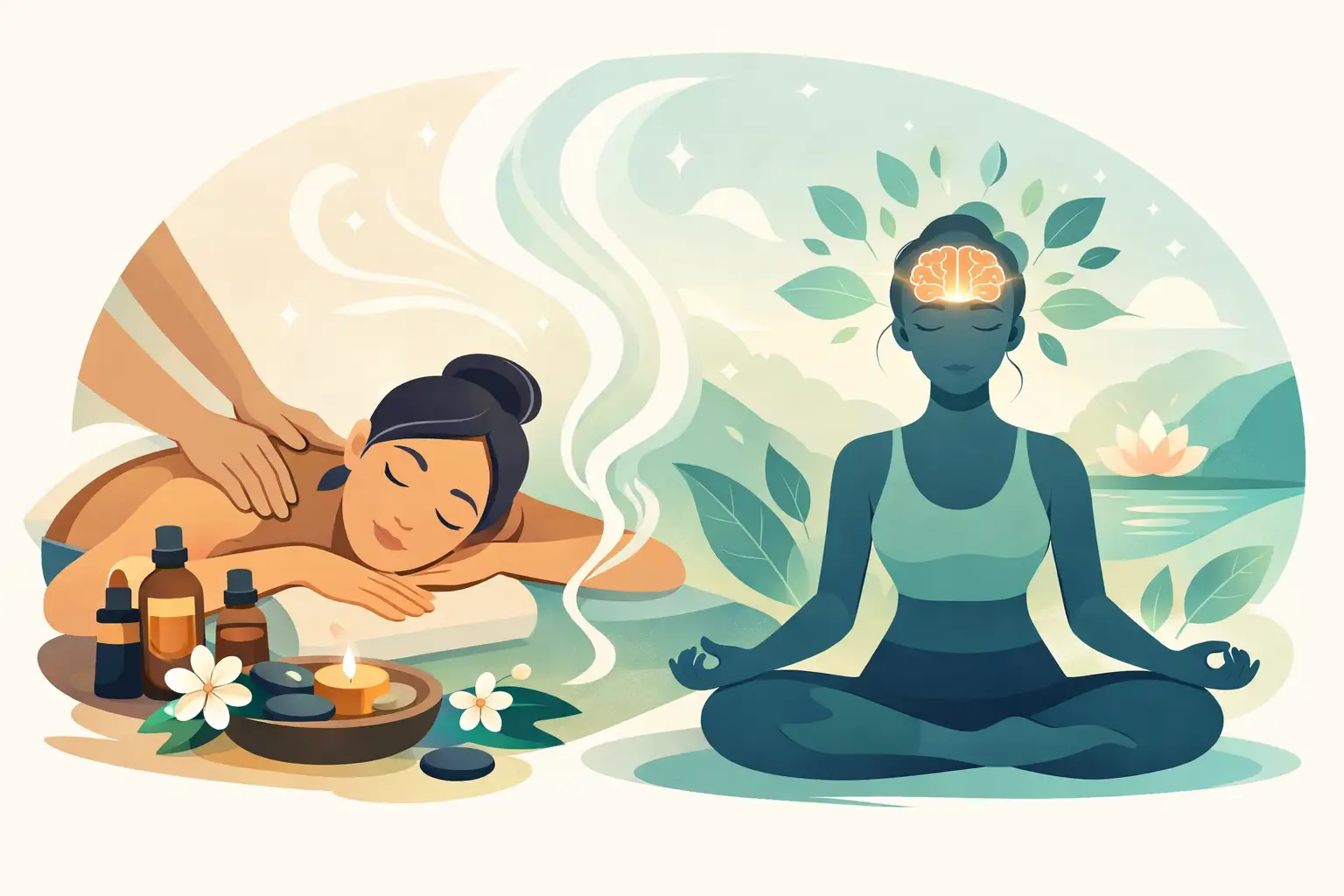
The room is quiet, your shoulders finally begin to drop, and a carefully chosen scent makes it easier to take a full breath. That is where aromatherapy massage benefits begin: not with a rushed fix, but with an experience designed to help your body shift out of constant tension and into rest.
For many people, massage already feels like essential self-care. Adding aromatic oils can make that time feel even more intentional. The scent, the warmth of the massage medium, and personalized hands-on care work together to create a treatment that supports relaxation while addressing the areas that hold the most stress.
What Makes an Aromatherapy Massage Different?
Aromatherapy massage pairs therapeutic touch with diluted essential oils selected for their aroma and the feeling they create during your session. Some scents feel bright and clarifying, while others are soft, grounding, or deeply calming. The oils are blended into a massage product and applied to the skin, while their fragrance becomes part of the atmosphere around you.
The most meaningful difference is personalization. A session can be shaped around what you need that day: a peaceful reset after an overloaded workweek, gentler care for a body that feels worn down, or a more restorative focus on tight shoulders, the low back, or tired legs.
It is not just about choosing a pleasant scent. The pressure, pace, areas of focus, and aromatic blend should work in harmony. At a boutique setting such as Absolute Skin Therapy, that attentive approach leaves room for a treatment that feels personal rather than routine.
Aromatherapy Massage Benefits You May Feel Right Away
A calmer response to daily stress
Stress has a way of becoming physical. It can show up as a clenched jaw, shallow breathing, raised shoulders, restless sleep, or the sense that your mind is still moving long after the day has ended. Massage encourages you to slow down, and a calming aroma can make it easier to settle into that quieter state.
This is one of the reasons aromatherapy massage is especially appealing to busy professionals and anyone whose schedule rarely leaves space to pause. For 60 or 90 minutes, there is nothing to manage. You are simply invited to rest, breathe, and let the treatment be about you.
Relief for muscle tension and everyday soreness
Massage techniques help soften areas of tightness and promote a more comfortable range of motion. Aromatic oils do not replace skilled bodywork, but they can enhance the sensory comfort of the experience, particularly when the massage is focused on the neck, shoulders, back, hands, or feet.
The result depends on the source of your soreness. Desk posture, travel, exercise, long hours on your feet, and emotional stress can all create different patterns of tension. Clear communication before and during your session helps your massage therapist adjust pressure and focus so the care feels effective without becoming overwhelming.
A more restful transition into the evening
Many clients choose calming aromas because they want to feel less keyed up after their appointment. When you leave a massage feeling physically looser and mentally quieter, it may be easier to create a gentler evening routine – a relaxed meal, less screen time, or an earlier bedtime.
A massage is not a cure for ongoing sleep concerns, but it can be a valuable part of a wellness rhythm that makes rest feel more attainable. If your mind tends to replay the day when you lie down, the lingering memory of a calm, cared-for experience can be a welcome reset.
A moment of emotional reset
There is a reason people often say they feel lighter after a thoughtful massage. Being cared for in a clean, private, peaceful environment can offer a rare sense of relief from the pressure to perform, respond, and keep moving.
Aromatherapy adds another layer to that pause. Scent is closely tied to memory and emotion, so a fragrance that feels comforting to one person may feel energizing or nostalgic to another. Your preferences matter. The best choice is not necessarily the most popular oil, but the one that helps you feel at ease.
The Skin-Comfort Element
A quality massage product can leave the skin feeling supple and conditioned, especially in areas that are often dry, such as the hands, arms, legs, and feet. The glide of the oil also allows the therapist to deliver smooth, continuous strokes without unnecessary pulling on the skin.
That said, essential oils are concentrated ingredients. More is not better. They should always be properly diluted, and your therapist should know about skin sensitivity, allergies, recent irritation, or any fragrance preferences before the session begins. If you are prone to reactions, a simple, gentle approach may be the most luxurious choice of all.
Choosing an Aroma That Suits Your Session
The right scent depends on the mood you want to create, not a one-size-fits-all rule. Lavender is often associated with a softer, more tranquil feel. Citrus aromas can feel clean and uplifting. Eucalyptus may feel crisp and refreshing, while warmer botanical blends can create a grounded, cocooning atmosphere.
Think about how you want to feel when you leave. If you are carrying the week in your shoulders and want to fully exhale, a calming blend may suit you. If you have an afternoon appointment and want to feel refreshed rather than sleepy afterward, something brighter may be a better fit.
Your therapist can guide the decision, but your reaction is the priority. An aroma should never feel too strong, distracting, or uncomfortable. Luxury is found in those details: a scent that feels balanced, pressure that feels considered, and a treatment paced around your comfort.
When to Speak Up Before Your Massage
Aromatherapy massage is adaptable, but a brief conversation beforehand helps ensure it is appropriate for you. Let your therapist know if you are pregnant, managing a medical condition, taking medications that affect the skin, recovering from an injury, or have a history of allergies, asthma, migraines, or sensitivity to fragrance.
It is also wise to mention any skin concerns, including active irritation, sunburn, rashes, or recent treatments that may leave the skin more reactive. In some situations, it may be best to skip aromatherapy, use an unscented option, or avoid specific areas. That is not a lesser experience. It is personalized care doing exactly what it should do.
If you are receiving massage for persistent pain, numbness, swelling, or symptoms that are new or severe, seek guidance from a qualified medical professional. Massage can support well-being, but it should not be used to diagnose or replace medical care.
How to Make the Benefits Last Beyond the Appointment
Give yourself a small buffer after your session whenever possible. Drinking water, moving slowly, and avoiding an immediate return to a packed schedule can help you preserve that unhurried feeling. You do not need a complicated ritual. Even ten quiet minutes in the car before heading home can make a difference.
Regular appointments may be helpful if tension is part of your normal routine, though the ideal frequency varies. Some clients benefit from a monthly reset, while others book around demanding work periods, travel, workouts, or times when stress is especially high. Consistency matters more than chasing a perfect schedule.
Aromatherapy massage is ultimately an invitation to pay attention to how you feel. When your body has been asking for softer shoulders, a calmer mind, and a little time to unwind, a personalized session can be a beautiful way to answer.
Leave a Reply