
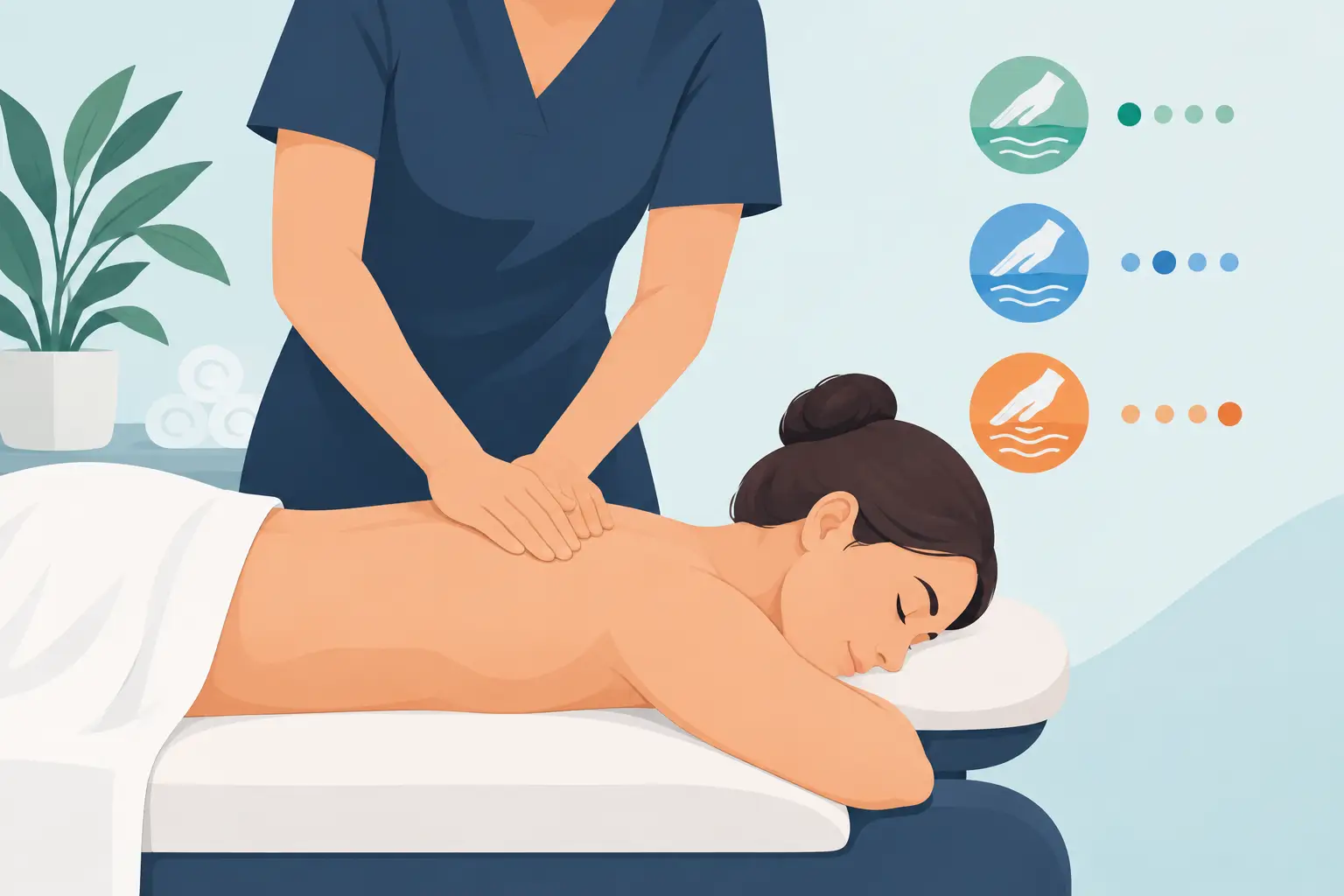
A massage should never feel like something you have to endure to earn the results. Knowing how to select massage pressure helps you arrive with clearer expectations, communicate with confidence, and leave feeling calmer rather than tender in all the wrong places.
The right pressure is personal. It can change based on your stress level, your activity, how well you slept, and even where you carry tension. A polished, restorative treatment is not about choosing the strongest option. It is about choosing the level of touch that helps your body soften, release, and recover.
What Massage Pressure Should Feel Like
Massage pressure generally falls on a spectrum from light and soothing to focused and firm. Each level can have a place in your wellness routine, but the best choice depends on what you want from your time on the table.
Light pressure is often ideal when your main goal is deep relaxation. It encourages you to slow down, settle your breathing, and let go of the constant mental and physical noise that can build up through a demanding week. This style of touch can feel especially welcome when you are overwhelmed, low on energy, or simply craving quiet time to unwind.
Medium pressure offers a little more focused attention while still feeling deeply comfortable. For many clients, it is the sweet spot: enough pressure to address everyday tightness in the shoulders, neck, back, or legs without turning the experience into a test of endurance. If you spend long hours at a desk, commute frequently, or notice general stiffness after workouts, medium pressure may be a beautiful place to begin.
Firm pressure can be useful when particular areas feel dense, overworked, or persistently tight. It is more targeted and intentional, but it should still feel controlled. Firm does not mean sharp, breath-holding pain. You should be able to relax into the work rather than brace against it.
How to Select Massage Pressure Based on Your Needs
Start with the reason you booked your massage. The answer does not need to be technical. A few honest details give your therapist a meaningful starting point.
If you want to decompress after a stressful season, gentle to medium pressure may support the experience you are looking for. When the nervous system has been running high, a treatment that is too intense can make it harder to settle. A slower pace and comforting pressure can feel far more restorative than forceful work.
If your body feels heavy from travel, long workdays, or a physically active routine, medium to firm pressure may be appropriate in the areas that need attention. That does not mean every part of your body needs the same level. Your upper back may welcome more focused pressure while your arms, calves, or lower back may prefer a lighter touch.
If you are new to massage, starting with medium pressure is often a wise choice. It lets you learn how your body responds without overdoing it. You can always ask for more attention in a specific area once you are settled into the session. It is much easier to increase pressure gradually than to recover from a treatment that felt too aggressive from the start.
Consider What Your Body Has Been Through Recently
Your preferred pressure can change from appointment to appointment. A workout, a long flight, poor sleep, dehydration, or an emotionally draining week can all affect sensitivity.
For example, the level of pressure that feels perfect after a sedentary workweek may feel like too much the day after an intense class or a weekend of moving furniture. There is no need to be consistent for consistency’s sake. The most effective massage is the one that responds to your body as it feels today.
If you are feeling unwell, unusually sensitive, or have a health concern that could affect your treatment, share that before the session begins. Thoughtful care starts with a full picture of what your body needs and what it may need to avoid.
A Productive Massage Is Not a Painful Massage
One of the most common misconceptions about bodywork is that discomfort equals effectiveness. While focused work on a tense area can feel intense, pain is not a requirement for relief.
A helpful sensation may feel like steady pressure, warmth, or a tender area gradually softening beneath the therapist’s hands. You may notice that you naturally take a deeper breath as tension releases. The feeling should remain manageable, and you should not have to clench your jaw, tighten your shoulders, or hold your breath to get through it.
Pressure is likely too strong if it feels sharp, burning, pinching, electric, or causes you to pull away. It is also worth speaking up if discomfort builds rather than eases after a few moments. Your therapist can adjust the depth, angle, pace, or technique to make the work more comfortable and productive.
Soreness can happen after a more focused massage, especially if an area was very tight, but you should not expect bruising or lingering pain. The goal is to support your well-being, not leave your body feeling punished.
The Best Words to Use During Your Session
You do not need to know massage terminology to communicate clearly. Simple feedback is exactly what your therapist needs.
Try phrases such as, “That feels great,” “Could you stay there a little longer?” or “Can we ease up slightly on this side?” If one area needs more focused attention, say so. If the pressure is perfect on your shoulders but too strong on your lower back, mention that as well.
You can also use a simple one-to-ten scale. A comfortable, productive level is often around a five to seven for clients seeking focused muscle relief. At that range, you feel the work, but you can still breathe normally and remain relaxed. If the sensation rises to an eight or beyond, it may be time to reduce the pressure.
At Absolute Skin Therapy, personalized care means your feedback is part of the treatment, not an interruption. A skilled therapist is listening with their hands, but your voice helps refine every detail of the experience.
Why Pressure Can Vary Across the Body
It is completely normal to prefer different pressure in different places. The muscles across the upper back may feel ready for firmer, more deliberate work, while the neck, abdomen, hands, feet, or inner legs may be much more sensitive.
This is why asking for “deep pressure everywhere” may not always create the best result. A customized massage can move between lighter and firmer touch as needed, honoring the unique needs of each area. That variation often makes the session feel more complete because your body is not being treated as though every muscle carries tension in the same way.
Your therapist may also begin with gentler work before moving into more focused pressure. Giving the body time to warm up can help tight muscles respond more comfortably. Rushing straight into strong pressure may feel intense without offering the same sense of release.
Make Your Next Massage More Restorative
Before your appointment, take a moment to notice what your body is telling you. Are your shoulders creeping toward your ears? Does your lower back feel fatigued after sitting? Are you mentally exhausted and craving stillness more than intensity? These cues can guide the pressure you request.
Hydrating, arriving a few minutes early, and allowing yourself a calm transition after your treatment can also shape how you feel. A massage is not only the time on the table. It is an opportunity to step away from the pace of the day and give your body the attention it has been asking for.
The ideal pressure is the one that leaves you feeling lighter, more comfortable, and more at home in your body. Let comfort be part of the standard, and give yourself permission to adjust until the experience feels truly yours.
Leave a Reply