
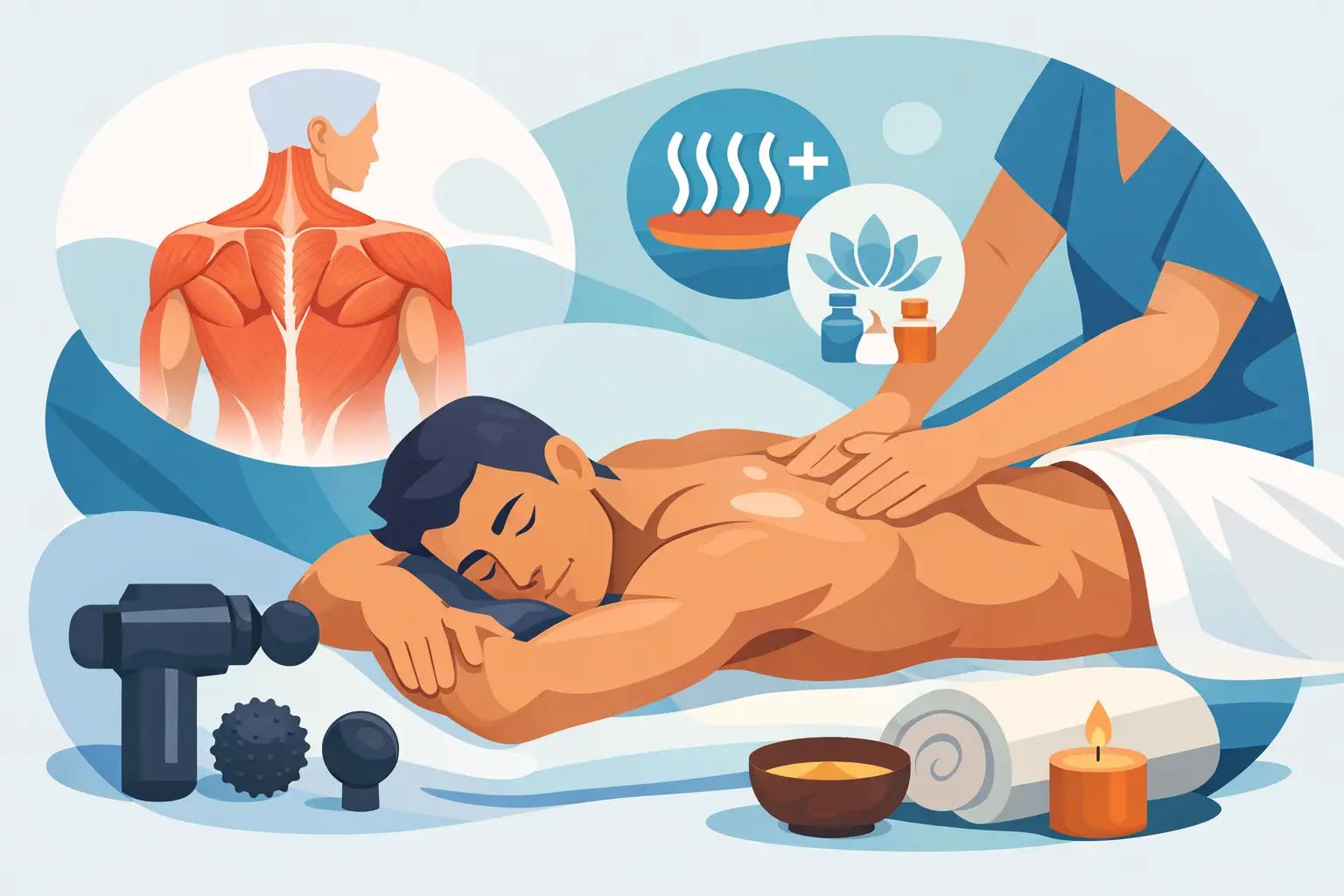
A hard workout can leave you feeling accomplished at 7 p.m. and surprisingly stiff by morning. Muscle recovery massage therapy gives your body a dedicated pause: time to release the tightness that builds after training, long hours at a desk, travel, or a demanding week that has settled into your shoulders and hips.
The goal is not to force sore muscles into feeling “fixed.” It is to create a calming, attentive experience that helps you feel more comfortable in your body, move with greater ease, and make recovery part of the wellness routine you can actually maintain.
What Muscle Recovery Massage Therapy Can Do
Recovery massage is a personalized treatment designed around areas that feel fatigued, tender, or overworked. Depending on how your body feels that day, your session may include slow, soothing work to settle overall tension, focused pressure for stubborn knots, and techniques that encourage a sense of openness through the back, neck, legs, arms, or hips.
After exercise, many people notice temporary soreness and stiffness, especially after returning to movement, increasing intensity, or trying a new activity. Massage can be a welcome part of the recovery window because it promotes relaxation and helps muscles that feel guarded begin to let go. The immediate benefit is often simple but meaningful: you leave feeling lighter, calmer, and less restricted by the tension you carried in.
It also supports the mental side of recovery. Training, work deadlines, poor sleep, and everyday stress can keep the nervous system switched on. A quiet, private treatment gives you space to slow down. When your mind settles, your body often follows.
The Right Pressure Depends on Your Body
More pressure is not automatically better. In fact, an overly aggressive massage when muscles are already very tender can leave you feeling more sensitive afterward. The most effective session is one that respects your current comfort level, training schedule, and recovery needs.
If you are carrying broad, everyday tightness, a soothing massage with moderate pressure may be exactly what you need. If one area feels particularly dense or restricted, more focused deep tissue-style work may be appropriate, provided it remains within a tolerable range. You should be able to breathe normally and relax into the treatment, not brace against every stroke.
A thoughtful therapist will check in about pressure and adjust as your body responds. That communication matters. What feels ideal for calves after a long walk may feel too intense for shoulders tightened by stress or for legs recovering from an especially challenging workout.
When to Schedule Your Session
Timing is personal, but it helps to think about what you want from the appointment. A gentle, restorative massage can be lovely soon after activity if your aim is to unwind and settle into rest. For a more focused session, many clients prefer to wait until the sharpest post-workout tenderness has eased.
If you have a race, performance, or demanding workout ahead, avoid treating massage as a last-minute test of how much pressure you can handle. Choose a lighter session focused on relaxation and comfort rather than intensive work. Save deeper, targeted attention for a time when your body has room to rest afterward.
Regular appointments can be especially helpful for people with physically active routines and for office professionals whose workouts are only one part of the tension picture. The right cadence may be weekly during a demanding period, monthly for ongoing maintenance, or simply when your body tells you it needs more care. Consistency matters more than intensity.
How to Get More From Your Massage
The best recovery session starts before you arrive. Hydrate normally throughout the day, eat something light if you need it, and give yourself a few extra minutes so you are not rushing into the treatment already stressed. Wear comfortable clothing and plan for a quieter evening if possible.
At the beginning of your appointment, be specific about what you are feeling. Mention whether you trained recently, where soreness is showing up, whether you have any areas you would prefer to avoid, and what kind of pressure you generally enjoy. A useful description can be as straightforward as, “My upper back feels tight after computer work, but my legs are sore from a long run.”
Afterward, resist the urge to pack your day with errands. Drink water, enjoy a nourishing meal, and allow your body to enjoy the calmer state you have created. Gentle movement such as an easy walk or light stretching can feel good, but there is no need to push through another intense workout simply because you feel temporarily looser.
You may feel deeply relaxed, pleasantly tired, or mildly tender in a focused area after massage. Those responses can vary based on pressure, hydration, stress levels, and how much tension you brought into the session. Let your body set the pace for the rest of the day.
Recovery Is Bigger Than One Appointment
Massage is most valuable when it fits into a fuller recovery rhythm. Sleep, nourishment, hydration, rest days, and sensible training progression all influence how your body feels. A massage cannot replace those basics, but it can make your routine feel more supported and more sustainable.
For the busy person balancing workouts, work, and social plans, this is where personalized care makes a difference. You do not need a one-size-fits-all protocol. You need a treatment that responds to the reality of your week: the cycling class that challenged your legs, the flight that tightened your hips, the laptop hours that settled into your neck, or the stress that made your jaw feel tense.
At Absolute Skin Therapy, each massage begins with listening. Your comfort, pressure preferences, and areas of concern shape the experience, so the treatment feels restorative rather than routine. In a clean, private boutique setting, wellness meets luxury without losing the practical purpose of helping you feel better in your body.
When Massage Should Wait
Massage is intended for wellness and relaxation, not for diagnosing or treating an injury. If you have sudden or severe pain, significant swelling, bruising, numbness, weakness, fever, an open wound, or pain that does not improve, seek guidance from a qualified medical professional before booking bodywork.
The same care applies after a recent injury, procedure, or health change. Let your therapist know about relevant conditions, medications, sensitivities, or pregnancy so your session can be approached appropriately. Clear communication is part of premium care, and it helps create an experience that feels both safe and deeply relaxing.
A recovery massage is not a reward you have to earn through an exhausting workout. It is a thoughtful way to care for the body that carries you through every full week. When tension starts to compete with your energy, give yourself permission to slow down, breathe, and make room for restoration.
Leave a Reply