
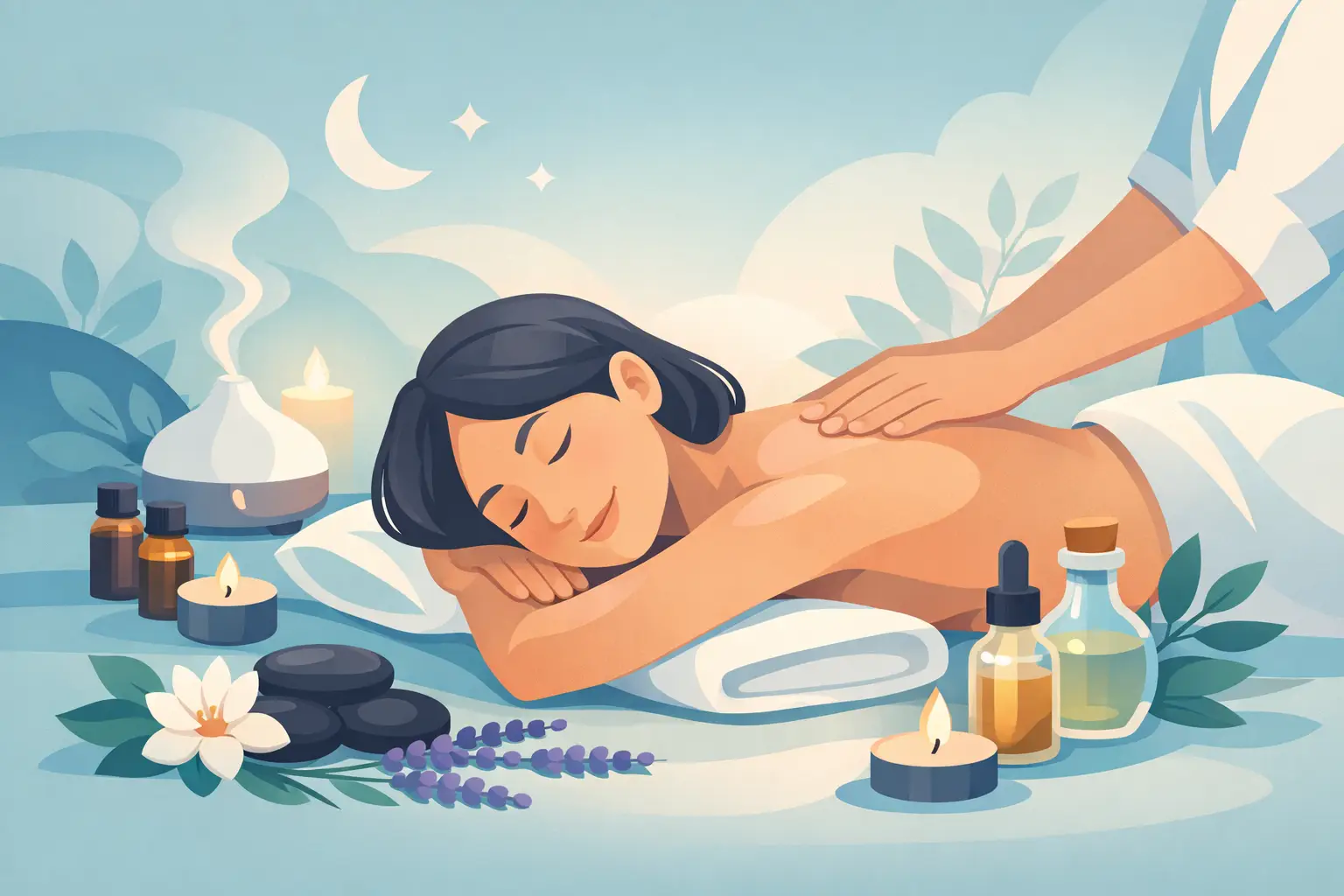
A busy mind rarely stays in the mind alone. It can show up as a tight jaw during a meeting, shoulders that never quite drop, shallow breathing on the drive home, or a body that feels tired but cannot settle. Aromatherapy massage for anxiety offers a quieter kind of support: dedicated time in a calming setting where thoughtful touch, a comforting scent, and unhurried attention help the nervous system shift out of high alert.
It is not a replacement for mental health care, medication, or support from a qualified clinician when anxiety feels persistent or overwhelming. It can, however, be a meaningful part of a personal wellness routine for people who carry stress physically and need a restorative place to reset.
Why Anxiety Often Feels Physical
When life feels demanding, the body may stay braced long after the stressful moment has passed. Muscles around the neck, upper back, hips, hands, and face can hold tension without much warning. Some people experience headaches, restless sleep, fatigue, digestive discomfort, or the sensation that they can never fully exhale.
Massage creates an intentional interruption to that pattern. A quiet room, comfortable temperature, privacy, and skilled, steady touch can give your body different information than the rush of a packed calendar. The goal is not to force relaxation. It is to create the conditions in which relaxation has room to happen.
For many clients, that is why the experience feels especially valuable after long hours at a desk, demanding travel, intense workouts, or a stretch of emotional pressure. Relief is not always dramatic. Sometimes it is simply noticing, for the first time all week, that your shoulders are no longer near your ears.
How Aromatherapy Supports a Calming Massage
Aromatherapy uses carefully selected essential-oil scents to complement the massage experience. Scent is closely connected with memory and emotion, which is why a familiar, gentle aroma can make a space feel immediately more comforting. During a massage, it adds another sensory cue that this is time to slow down.
Lavender is often chosen for its soft, calming character. Bergamot can feel bright and balancing, while chamomile and sandalwood are frequently associated with a more grounded, cozy atmosphere. The best choice is personal. An aroma that one person finds soothing may be too floral, too earthy, or simply not appealing to someone else.
That preference matters. At a boutique spa, aromatherapy should never feel like an automatic extra or an overpowering cloud of fragrance. A customized approach begins with asking what you enjoy, what you want to avoid, and how you hope to feel when you leave. The scent should support the treatment, not distract from it.
What an Aromatherapy Massage for Anxiety Can Feel Like
The most effective session is usually one that meets you where you are. If your body is depleted and sensitive, lighter, flowing massage may be the better choice. If anxiety has settled into chronic shoulder or back tension, focused work can be included without turning the experience into something overly intense. More pressure is not always more therapeutic, especially when your system already feels overstimulated.
Before the treatment begins, share what has been happening in your body. You might mention tension headaches, trouble sleeping, a stressful work period, soreness from exercise, or areas you prefer not to have touched. You can also say that you would like minimal conversation, a quieter pace, or extra attention to your hands, scalp, neck, or feet. Clear communication is part of personalized care, not a special request.
During the massage, your therapist may use a chosen aromatic blend in the massage oil or offer a gentle inhalation from a safe distance. The room remains calm, but you remain in control. You can request an adjustment to pressure, temperature, music, draping, or scent at any time. Feeling respected and comfortable is central to the restorative effect.
Afterward, many people notice a sense of looseness, a calmer mood, or easier breathing. Others feel pleasantly sleepy or emotionally tender, particularly after a stressful stretch. Give yourself a little space after the appointment if possible. Hydrate, eat something nourishing if you need it, and resist the urge to immediately fill the quiet with emails and errands.
Choosing the Right Level of Pressure
There is a common assumption that a massage must be very firm to be worthwhile. For anxiety, that depends on the person and the day. Deep, targeted work can feel relieving for a client with stubborn muscular tightness, but it may be too activating for someone who arrives feeling depleted, sensitive, or unable to relax.
A balanced treatment often combines soothing, rhythmic strokes with focused attention where tension is most pronounced. This approach allows the body to soften first, rather than asking it to endure more intensity. A skilled therapist will pay attention to your feedback and adjust as needed instead of following a one-size-fits-all routine.
If you are unsure, start gentler. You can always ask for more focused pressure as the session progresses. It is harder to settle into calm after pressure that feels painful or overwhelming.
Small Choices That Make the Experience More Restorative
Your appointment begins before you step onto the massage table. Arriving a few minutes early gives you time to transition instead of rushing in with your phone in hand. Consider silencing notifications, wearing comfortable clothing, and allowing yourself to be offline for the duration of your visit.
Try not to judge whether you are relaxing “correctly.” Thoughts may continue to come and go. That is normal. Rather than fighting them, return your attention to something simple: the steady pace of the massage, the warmth of the room, or the movement of your breath.
A regular schedule may also be more supportive than saving massage only for the point of burnout. The right cadence varies. Some clients benefit from occasional care during particularly busy seasons, while others value consistent appointments as part of maintaining physical comfort and emotional balance. Your needs, schedule, and budget all deserve consideration.
When to Be Cautious With Aromatherapy
Natural does not automatically mean appropriate for every person. Tell your therapist about allergies, asthma, fragrance sensitivities, migraines, pregnancy, skin irritation, or any health concerns that could affect the use of essential oils. It may be best to skip aromatherapy, choose a very mild option, or focus solely on the massage itself.
If anxiety includes panic attacks, severe sleep disruption, intrusive thoughts, or difficulty functioning day to day, professional mental health support is an essential part of care. Massage can be a comforting complement, but it should not carry the burden of treating a condition that needs clinical attention.
For clients seeking a private, polished setting in West Hollywood, Absolute Skin Therapy approaches each session with the same principle: comfort comes first. Your treatment can be tailored around the areas that hold stress, the pressure your body welcomes, and the aromatic experience that helps you feel most at ease.
The next time your body signals that it has been carrying too much, consider answering with more than a quick stretch between obligations. A quiet hour of attentive care may be the pause that helps you return to yourself with softer shoulders, a steadier breath, and a little more room to unwind.
Leave a Reply