
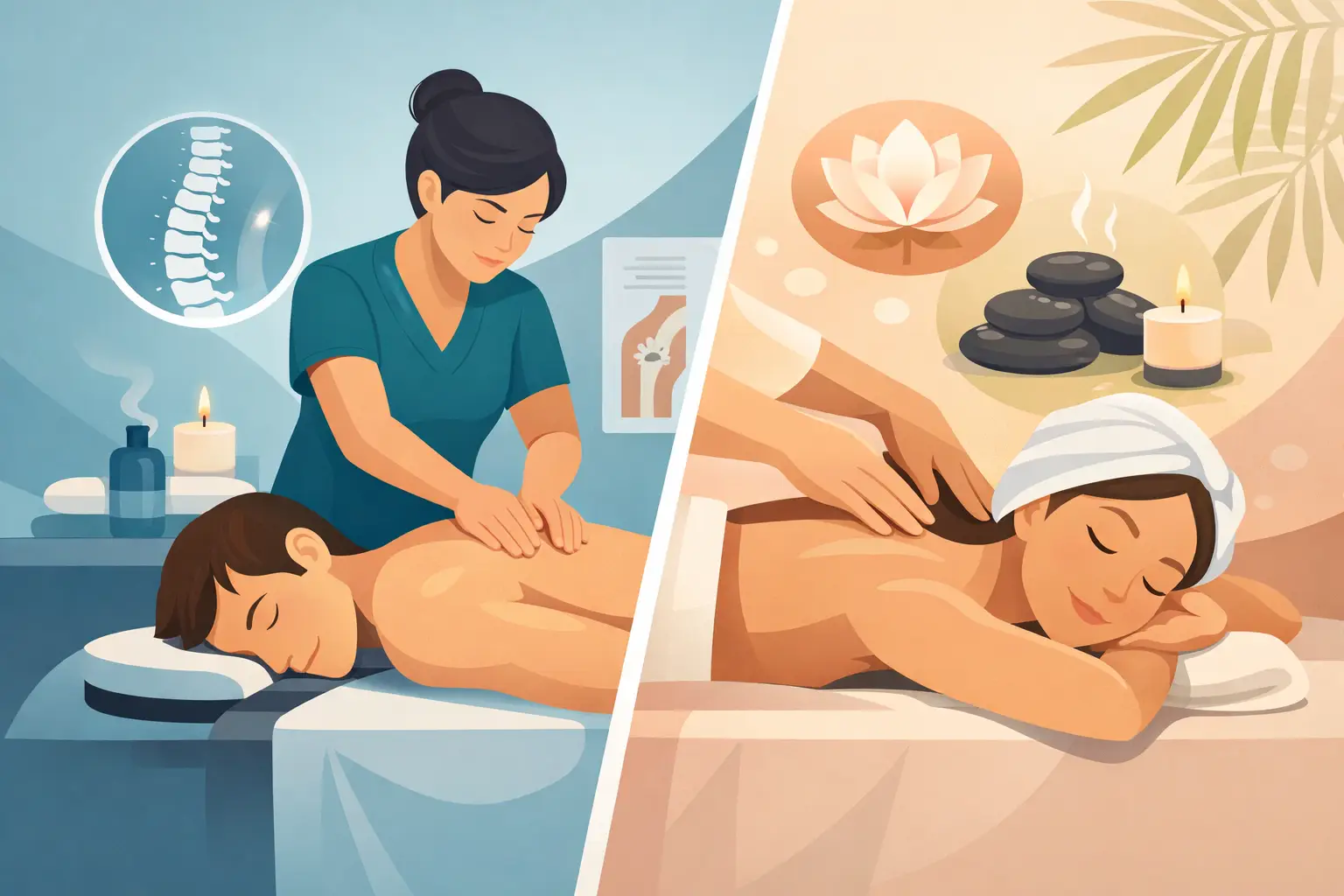
A massage can feel deeply calming and still be designed to address the tight shoulder that keeps returning after long days at a desk. That is the heart of therapeutic massage versus relaxation massage: both can help you feel better, but they begin with different intentions. One is more focused on specific areas of discomfort and mobility, while the other creates space for your whole body and mind to settle.
At a boutique spa, the best choice is rarely about choosing between “good” and “better.” It is about choosing the experience that meets you where you are – whether you need focused relief, unhurried rest, or a thoughtful blend of both.
Therapeutic Massage Versus Relaxation Massage: The Core Difference
Therapeutic massage is goal-oriented bodywork. Your session may focus on persistent tension in the neck, shoulders, back, hips, or legs, with pressure and techniques adjusted to reach areas that feel tight, overworked, or restricted. It is often a natural choice for clients whose routines involve long hours at a computer, demanding workouts, travel, repetitive movement, or the physical weight of stress.
Relaxation massage is centered on calming the nervous system and creating a full-body sense of ease. The pace is generally slower, the pressure is usually lighter to moderate, and the treatment is designed to help you release the kind of everyday tension that can leave you feeling mentally crowded and physically drained.
The two approaches overlap more than many people expect. A relaxation massage can soothe tight muscles, while therapeutic massage can be remarkably restful when it is delivered with attentive pacing and care. The difference lies in the emphasis. Therapeutic work prioritizes targeted relief. Relaxation work prioritizes deep restoration.
When Therapeutic Massage May Be the Better Fit
Therapeutic massage may suit you when one or two areas are asking for extra attention. Perhaps your upper back feels stiff after a week of meetings, your shoulders seem permanently lifted toward your ears, or your legs feel heavy after standing, training, or commuting across Los Angeles. Rather than using the same pressure throughout the body, the therapist can spend more time on the places that need it most.
This style of massage often includes firmer, more deliberate work in tense areas. That does not mean pain should be part of the experience. Effective pressure is not a test of endurance. You should feel that your therapist is working with your body, not against it, and you should always be comfortable speaking up if pressure feels too intense.
A therapeutic session can leave you feeling lighter, more open, and more aware of how your body has been holding stress. Some people also notice mild tenderness afterward, particularly when they have significant muscle tightness or have not had bodywork in a while. Hydration, gentle movement, and a quieter evening can help you make the most of that post-massage reset.
Choose therapeutic-focused care when you want to address:
Persistent tightness in your neck, shoulders, or lower back; soreness linked to exercise or repetitive movement; limited comfort in a particular area; or tension that is distracting you from work, sleep, and everyday movement. If you are managing an injury, a medical condition, unexplained pain, or recent surgery, speak with your healthcare provider first and let your massage therapist know before your appointment.
What Relaxation Massage Feels Like
Relaxation massage is for the moment when your body needs permission to slow down. It is not “just” an indulgence. Stress often shows up physically through shallow breathing, clenched jaws, restless sleep, tense shoulders, and a feeling that it is difficult to fully switch off. A soothing massage creates a protected hour where there is nothing to manage, solve, or rush toward.
The experience is typically flowing and full-body, with steady movements that encourage circulation and comfort. Your therapist may use aromatherapy or other comforting touches when appropriate, but the most essential element is intentional care: a calm environment, a clean private setting, and treatment that is tailored to your preferences.
For many clients, the benefits are immediate. They leave feeling calmer, softer through the shoulders and back, and more present in their bodies. The effects can also carry into the rest of the day, making it easier to rest, focus, and reconnect with a sense of balance.
Relaxation massage is especially fitting when your stress is broad rather than concentrated in one painful area. If everything feels a little tense, your sleep has been off, or you simply want time to unwind without a highly targeted treatment plan, this approach offers restorative care without asking your body to do more work.
Pressure Is Personal, Not a Category
One common misunderstanding is that therapeutic massage must be very deep and relaxation massage must be very light. In reality, pressure is personal. Some clients feel most relaxed with moderate, grounded pressure, while others prefer a lighter touch. Likewise, a therapeutic massage can include gentler work around sensitive areas and deeper techniques only where they feel appropriate.
Your comfort should guide the session from beginning to end. A thoughtful therapist will ask about areas of concern, preferred pressure, recent activity, and what you want to feel when you leave. Those details matter because the same massage is not right for every body on every day.
If you arrive with tight shoulders but also feel exhausted, a blended approach may be ideal: focused work where you need relief, balanced with a soothing pace that lets you relax. If you are preparing for a busy week, recovering from a demanding routine, or simply craving quiet, your massage can be adapted accordingly.
How to Decide Before You Book
Start with one simple question: what do you want to be different when your appointment is over? If your answer is “I want this specific tension to ease,” therapeutic massage is likely the right starting point. If your answer is “I want to feel calm again,” relaxation massage may be the better choice.
Then consider your energy level. A firmer, focused session can be satisfying when you feel physically tight and ready for targeted work. But if you are depleted, overstimulated, or carrying emotional stress, a gentler restorative experience may offer more value that day. Wellness is not always about pushing for the most intense treatment. It is about receiving the care that supports you now.
It also helps to think beyond a single appointment. Regular relaxation massage can be a meaningful part of an ongoing self-care rhythm, especially during stressful seasons. Therapeutic-focused sessions can be scheduled when a familiar area begins to feel restricted or when your routine has been especially demanding. Many clients benefit from alternating between the two based on what their bodies need.
A Personalized Massage Experience Matters
The label on a menu only tells part of the story. The quality of the experience comes from being heard, treated with professionalism, and cared for in an environment where you can truly settle in. At Absolute Skin Therapy, each massage begins with attention to your needs, so your treatment feels personal rather than routine.
That may mean spending more time easing the upper-body tension that comes with screen-heavy workdays. It may mean creating a quieter, more soothing session after a full week. It may mean combining focused techniques with a peaceful pace so you do not have to choose between relief and relaxation.
The most rewarding massage is the one that leaves you feeling cared for in a way that lasts beyond the treatment room. Listen to what your body has been telling you, share it openly at the start of your session, and allow your next hour of care to be exactly what you need.
Leave a Reply